
Planning for retirement: 10 key decisions to make between 55 and 65

Retirement is a new chapter – and a good financial plan helps you enjoy it on your own terms. How much money will you need? Should you take a pension or a lump sum? And what about your mortgage? Thinking these questions through now gives you a clearer picture of life after work.
The essentials at a glance
Good retirement planning starts well before your last day at work. Between 55 and 65, a few key decisions can make a big difference to your life after work.
This guide walks you through 10 important decisions to consider before you retire – with practical tips, clear explanations and no unnecessary financial jargon. The key? Think of them as parts of one plan, rather than separate questions to answer.
What could your retirement look like with Selma? We bring your financial situation and goals together in a personal investment and withdrawal plan – and manage your investments along the way.
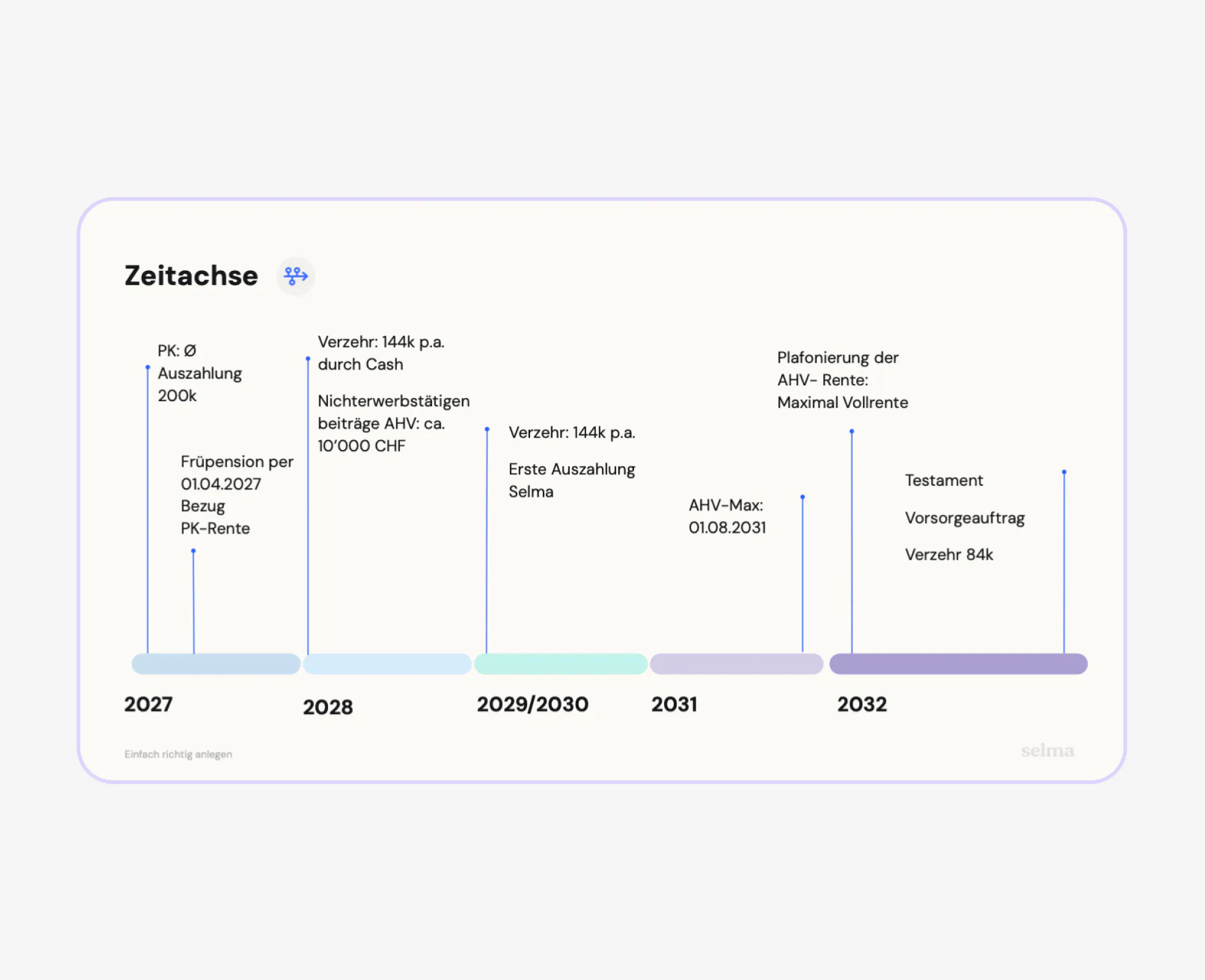
1. What would you like life in retirement to look like?
Before looking at your OASI (AHV), pension fund or investments, start with a more personal question:
How would you like to spend your retirement?
Would you like to travel more? Gradually cut back on work? Stay in your own home? Support your family? Or treat yourself a little more in those first few years?
Your plans help shape how much money you will need.
So look beyond your current bills and everyday expenses. Ask yourself:
- Which expenses will disappear when you retire?
- Which might increase?
- What bigger purchases or projects do you have planned?
- How much would you like to spend each month on leisure and travel?
- How much money would you like to keep aside for peace of mind?
Your answers form the basis of your retirement budget. This, in turn, helps you make the next decisions: How much income will you need? How much of it should come from a reliable pension? And how much of your money can stay invested for the long term?
Don't forget
Plan for more than just paying the bills. Your retirement budget should reflect the life you want to lead.
2. When would you like to retire?
When you retire makes a big difference to your finances throughout retirement.
You could retire at the standard retirement age, finish earlier, gradually reduce your working hours or keep working for longer. Each option affects your income, pension fund and savings differently.
Give yourself time to think about these questions:
- Would you like to work until the standard retirement age?
- Could early retirement be an option for you?
- Would easing into retirement gradually suit you better?
- Would you like to keep working part-time after you retire?
- How will your income change as you move from working life into retirement?
If you are considering early or partial retirement, look beyond the first year or two. What matters is how your choice will affect your finances throughout retirement.
Don't froget
The right time to retire is about more than your age. It should fit both the life you want and your financial situation.
3. How much will you receive from OASI (AHV)?
For most people, the Swiss state pension – OASI, known as AHV in German – is an important part of their retirement income. It is worth finding out early how much you can expect.
Start by checking your estimated pension and whether there are any gaps in your contribution record. This helps you work out how much additional income you will need from your pension fund, savings and investments.
Key questions to ask:
- How much OASI pension am I likely to receive?
- Are there any gaps in my contribution record?
- Do I want to start receiving my pension at the standard retirement age?
- Would taking it earlier or delaying it make sense for me?
- When do I need to apply?
Taking your pension early means you start receiving payments sooner, but the amount is permanently reduced. Delaying it works the other way round: you wait longer for payments to begin, but receive a higher pension afterwards.
Don't forget
Think of your OASI (AHV) pension as part of the bigger picture. When to start taking it also depends on when you stop working, your other sources of income, and your savings and investments.
4. What can you expect from your pension fund?
For many people, their pension fund holds the largest share of their retirement savings. That makes it worth taking a closer look a few years before you retire.
Take out your latest pension statement and check:
- How much have you saved so far?
- Roughly how much pension can you expect to receive?
- Which conversion rate applies to you?
- Do you have any vested benefits – pension savings from previous jobs – held elsewhere?
- Is there room to make voluntary top-up contributions to your pension fund?
- What deadlines apply if you want to take a lump sum?
Pension savings from previous jobs can easily be overlooked. Any voluntary top-up contributions should also fit your wider plan, particularly when you intend to retire and whether you want to take a regular pension or a lump sum.
Your conversion rate matters too: it determines how much annual pension you receive from the savings used to fund it.
Don't forget
Look beyond the figure on your pension statement today. What matters is what you can expect to receive when you retire – and how that fits with your other savings, investments and planned spending.
5. A pension, a lump sum or a bit of both?
When you retire, you need to decide how to take your pension-fund savings: as a lifelong pension, a lump sum or a combination of the two.
A pension offers security and a regular income. Taking a lump sum gives you more flexibility to decide how to use and invest your money.
Combining the two can make sense if you want a reliable income to cover part of your everyday spending while keeping some of your money flexible.
To help you decide, consider:
- How much do you spend each month?
- What reliable sources of income do you already have?
- How important is a guaranteed income to you?
- How much flexibility would you like to keep?
- Would you like to leave money to your loved ones?
- What is your pension fund’s conversion rate?
- Would you prefer to manage your money yourself or have it managed professionally?
Often, the most useful question is not simply “Pension or lump sum?”, but:
How much security do I need – and how much flexibility would I like to keep?
Don't forget
6. How will you use your lump sum?
If you take some or all of your pension-fund savings as a lump sum, the next part of planning begins:
How can this money support you throughout retirement?
Leaving everything in a bank account is rarely the best solution. But investing all of it for the long term is not the answer either.
Ask yourself:
- How much money will you need in the next two or three years?
- How much should you keep as a cash reserve?
- How much can stay invested for longer?
- How much would you like to withdraw regularly?
- What will you do if markets take a downturn?
- How long will your money need to last?
A good plan separates the money you will need soon from the money you can invest for longer. That way, you do not have to sell investments to cover every expense, while giving your longer-term investments the chance to grow.
Don't forget
7. How should you plan your pillar 3a and other retirement savings?
Alongside your pension fund, pillar 3a plays an important role in planning for retirement.
Especially in the final years before you retire, look beyond how much you have saved and think about when you want to withdraw each part of it.
Ask yourself:
- How many pillar 3a savings or investment accounts do you have?
- When would you like to withdraw the money from each account?
- Will you be withdrawing any other pension savings in the same year?
- How much of this money will you need straight away?
- How much could stay invested for longer?
If you have several pillar 3a accounts, you can stagger withdrawals over different years. Depending on where you live and your personal circumstances, this could help reduce the tax you pay on those withdrawals.
The key is to plan your pillar 3a, pension fund and other savings and investments together. Think about when you will need the money and how each part can help fund your retirement.
Don't forget
Think beyond when to withdraw your pillar 3a savings. Consider how much you will need straight away and how much can keep working for you in retirement.
8. Will your mortgage still work for you in retirement?
Your income usually changes when you retire, so it is worth checking whether your mortgage will still suit your financial situation.
If you own your home, ask yourself these questions a few years before retirement:
- Will your mortgage still be affordable on your future income?
- Would you like to repay part of it – or will you need to?
- Would you use pension-fund savings to do so?
- How much would you have left as a cash reserve?
- Are any major renovations coming up?
- Would you like to stay in your home for the long term?
Look beyond the size of your mortgage. Your plan should also account for ongoing housing costs, possible renovations and keeping enough money readily available.
A smaller mortgage can give you more security in retirement. But tying up too much money in your home could leave you short of funds for other expenses later on.
Don't forget
Talk to your bank early about whether your mortgage will remain affordable in retirement. You will usually have more options a few years ahead than just before you retire.
9. How will your tax bill change after retirement?
Retirement changes more than your income – it also affects your taxes.
Your OASI (AHV) and pension-fund pensions are taxed as income. Meanwhile, some of the tax deductions you could claim during your working life no longer apply.
Lump-sum withdrawals from your pension fund or pillar 3a are taxed separately from your regular income.
It is worth checking these questions early:
- How much taxable income will you have in retirement?
- Which pension payments will be taxed as income?
- Which lump-sum withdrawals are you planning?
- Could you spread withdrawals across different years?
- How will your taxable wealth change?
- What difference does where you live make?
If you have several pots of retirement savings, it can make sense to coordinate the withdrawals rather than take everything in the same year.
Don't forget
Tax matters when planning your retirement – but it is only part of the picture. When deciding on a pension, a lump sum or how to invest, look beyond what gives you the lowest tax bill in the short term.
10. Have you planned for your loved ones and your estate?
Planning for retirement also means thinking about what would happen financially if something happened to you or your partner.
It is not the easiest topic to think about – but it matters.
Take a moment to check:
- What benefits would your pension fund pay to your surviving partner or family?
- How would your household income change if one of you passed away?
- Is your will up to date?
- Have you appointed someone to handle your affairs if you become unable to do so yourself?
- Have you recorded your wishes for medical care in an advance healthcare directive?
- Are your named beneficiaries on pension and insurance policies still up to date?
- Have you made clear arrangements for your property and other assets?
If you live together unmarried, have a blended family, own property or have substantial assets, it is especially worth making clear arrangements rather than assuming the default rules will reflect your wishes.
Don't forget
Plane nicht nur für den idealen Verlauf. Ein guter Ruhestandsplan sollte auch funktionieren, wenn sich das Leben unerwartet verändert.
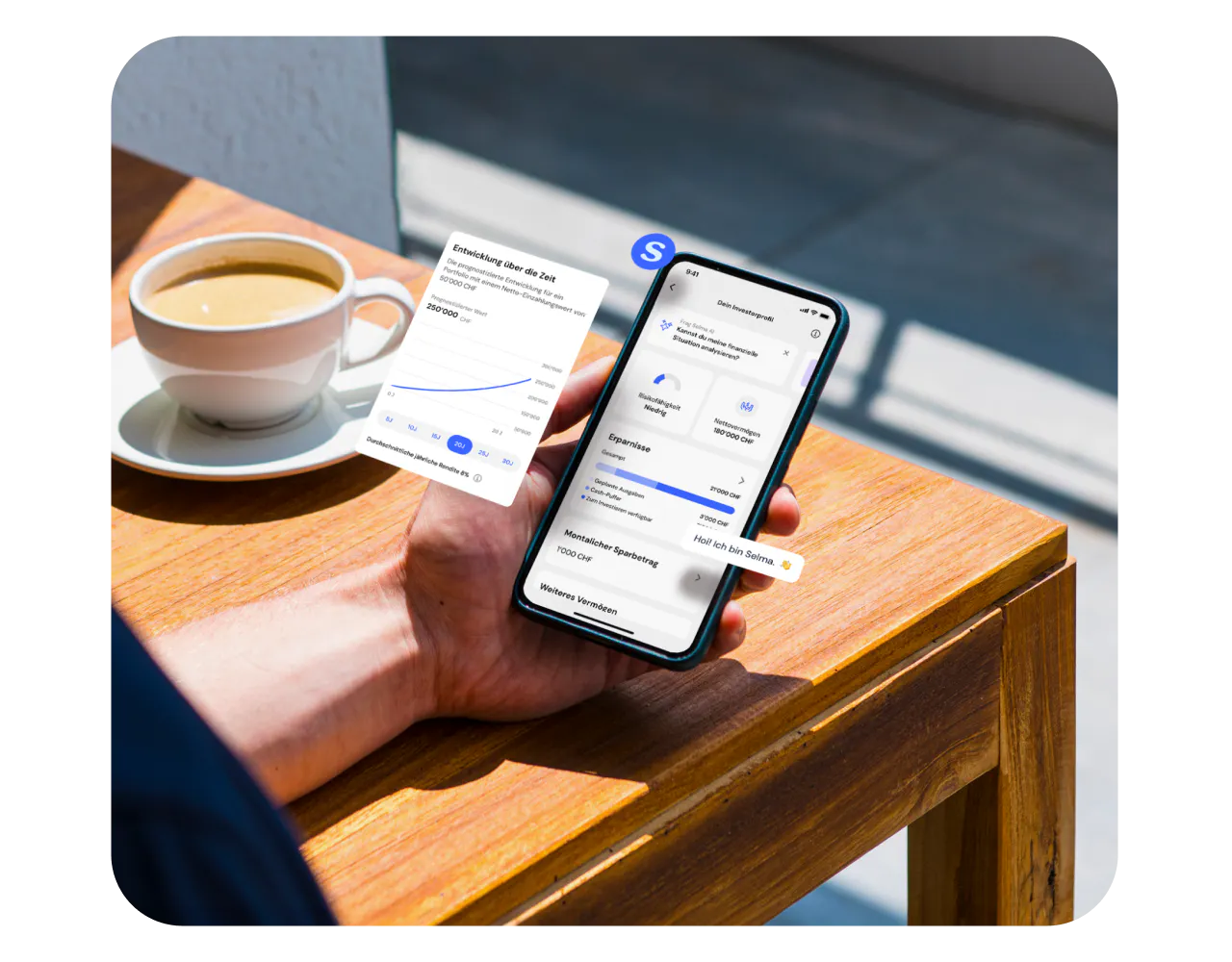
Bringing it all together: A retirement plan for your money and your life
Retirement planning is not about one single decision. It is about connecting the dots between your spending, reliable sources of income, pension fund, savings and investments, mortgage and plans for life after work.
Looking at the whole picture helps you decide how much security you need, how much money you want to keep flexible and how your savings can support you throughout retirement.
The earlier you start, the more options you have.
Plan your retirement with Selma
This is where Selma comes in. We look beyond individual investments to understand your financial situation as a whole: your income and assets, your planned spending, how much cash you need readily available and how much can stay invested for the long term.
We bring this together in a personal investment and withdrawal plan for your retirement. Selma manages your investments along the way and adjusts them as your situation changes.
Would you like a clearer idea of your next steps? Book a free conversation with our experts. Together, we will create a personal roadmap for your retirement.

Niklas Linser
Niklas is taking care of Selma's digital marketing channels. He is an expert in communication, holds a degree in international economics and is way too passionate about. 🎾
LinkedIn